




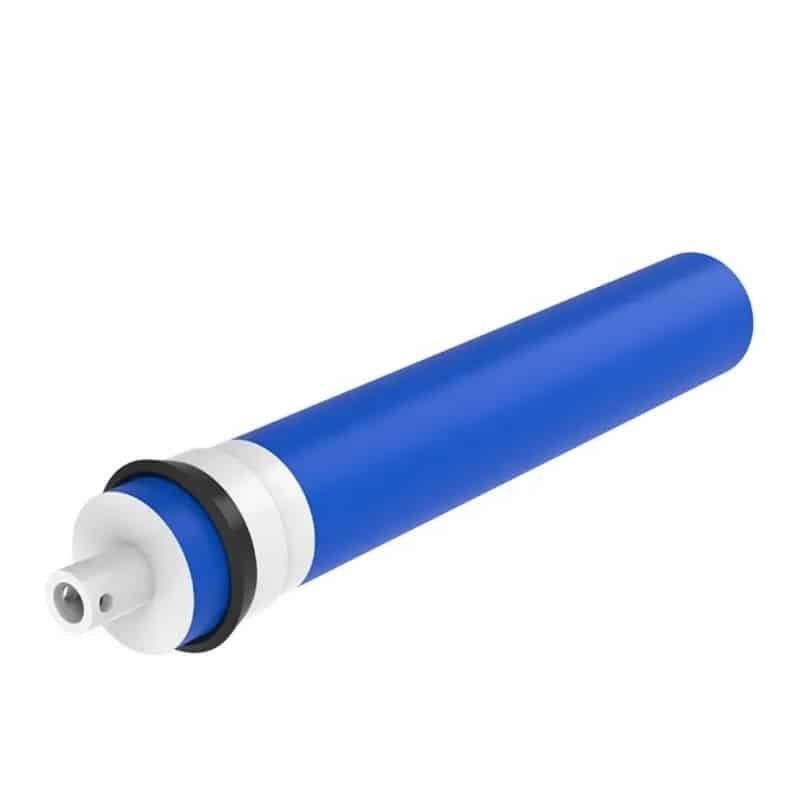


You can control membrane fouling chemical water treatment with targeted chemistry, but only when the chemicals match both the foulant type and the membrane material. Membrane fouling means biological, colloidal, organic, or mineral material builds up, blocks pores, and cuts membrane filtration performance. Two levers support mitigation: scheduled chemical cleaning and pretreatment chemistry. Both belong in a wider membrane filtration plan; membrane cleaning needs a schedule.
Membrane fouling chemical water treatment needs compatibility as much as cleaning power. A wrong chemical causes damage and worse fouling. Match agents to material and foulant:
Material | Agents | Foulant |
|---|---|---|
PVDF, PAN, PA6 nanofibrous membranes | NaOH, citric acid, SDS, Triton | General |
PAN nanofibrous membranes | NaOH, citric acid, SDS, Triton | Oily wastewater |
Inorganic foulants | Citric acid, hydrochloric acid, sulfuric acid | Salts |
Key Takeaways
Choose cleaning chemicals that fit both the type of foulant and the membrane material. This helps avoid damage and makes cleaning work better.
Clean membranes when performance drops, not on a fixed schedule, to save costs and extend membrane life.
Use pretreatment, such as coagulation and antiscalants, to stop foulants before they reach the membrane.
Watch for early warning signs, like lower flux and higher pressure, to prevent fouling that can’t be reversed.
Try new chemicals on a small scale first. This makes sure they work well with your own system.
Understanding Membrane Fouling and Its Main Causes
Membrane fouling shows up in several ways. Biological slime grows as a biofilm. Colloidal solids collect in feed channels. Natural organic matter sticks to pores. Mineral scale forms crystals from salts. Each type of foulant changes how well membrane filtration works and how fast membrane fouling happens.
Foulant type | Typical performance loss |
|---|---|
Biological fouling | Biofilm formation and flow restriction (increased dP) |
Organic fouling | Reduced permeability / declining permeate production |
Colloidal fouling | Feed-channel blockage and pressure increase |
In membrane bioreactors, soluble microbial products cause much of the membrane fouling. Polysaccharides and proteins build a gel layer on the membrane. When soluble polysaccharide levels are higher, sludge becomes harder to filter. Polysaccharide content serves as a proxy for fouling degree. Protein levels stay much lower and only slightly affect fouling.
Biological, Colloidal, and Organic Foulants in Wastewater
Biological fouling raises first-stage differential pressure as biofilm blocks the feed channel. A dP above about 3.5 bar can cause irreversible mechanical damage. Organic fouling lowers flux as a contamination layer blocks water flow. You then need higher operating pressure and more energy. Both foulants respond to cleaning, but cleaning adds downtime, chemical cost, and labor cost. It also shortens membrane life.
Effective membrane fouling mitigation improves membrane filtration performance and lowers chemical treatment costs. Watch for lower permeate flow, higher differential pressure, and declining salt rejection. These signals point to deposits that raise hydraulic resistance and make membrane fouling worse.
Why Oily Wastewater Makes Fouling More Severe
Oil droplets wet the membrane surface and pores during oily wastewater treatment. That wetting makes membrane fouling from oily wastewater harder to reverse. Small droplets enter pores and stick to pore walls. Larger droplets block pores completely. Others seal or bridge pores. Surface cake layers add resistance on top of membrane resistance. Membrane fouling from oily wastewater often needs chemical cleaning.
Reversible fouling comes off with backflush or a fresh-water feed change. Irreversible fouling needs chemical cleaning. Both forms appear at membrane filtration start in the treatment of oily wastewater. Oil–water separation upstream protects membranes. Antifouling membranes and pretreatment choices support fouling reduction in any oily wastewater treatment train. Membrane fouling control needs smart mitigation strategies, and these mitigation strategies pair pretreatment with antifouling membranes to keep oily wastewater treatment costs down.
Membrane Fouling Chemical Water Treatment Strategies

You have two chemical levers for membrane fouling chemical water treatment: scheduled cleaning and pretreatment chemistry. Each lever targets different foulants. Together, they keep your membrane filtration system stable.
Scheduled Cleaning With Detergents, Caustics, and Acids
Clean-in-place (CIP) restores flow, keeps salt rejection steady, and makes membrane life longer in an ro membrane system. You clean online without taking anything apart. How well it works depends on flow, reagent concentration, temperature, and contact time. A standard CIP cycle runs 4–8 hours, much shorter than the 2–5 days needed for membrane replacement.
Follow this sequence for your ro system:
Pre-rinse with clean water to replace feedwater and check the flow path.
Low-pH (acid) cleaning and rinse to dissolve mineral scales and metal deposits.
High-pH (caustic) cleaning and rinse to remove organic and biological material.
Final rinse to strip all cleaning chemicals.
Quality rinse to confirm salt rejection is back to acceptable conditions.
Circulate at low pressure (≤60 psi), moderate flow (3–5 m³/h per vessel), 30–60 min per stage, ideally 30–35°C. Soak, then rinse to neutral pH (6–8). High flow and low pressure remove the most foulant without going over differential-pressure limits.
Stage | pH Range | Typical Agents | Target Foulants |
|---|---|---|---|
Alkaline cleaning | 11–13 | Caustic and surfactant solutions | Biofouling deposits and organic matter |
Acid cleaning | 1–2 | Citric acid or hydrochloric acid | Calcium carbonate, calcium sulfate, metal oxide scaling |
Cleaning with chemicals too often wears membranes down. Fixed calendar schedules clean too early or too late. Instead, clean when normalized permeate flow drops 10–15% from baseline, when feed or differential pressure rises, or when salt rejection falls. Most ro plants need cleaning every one to six months. Control pH, temperature, and contact time during every membrane cleaning process to avoid damage.
Pretreatment Chemistry for Membrane Fouling Mitigation
Pretreatment stops foulants before they reach your membranes. Coagulation and flocculation clump particulates and colloids together so they can be removed. pH adjustment (around 4.0–6.5) lowers the chance of carbonate scaling. Ion exchange removes scale-forming divalent cations like calcium and magnesium. Antiscalant dosing gets in the way of crystal growth using phosphonates, polyacrylates, and polymaleic acid derivatives. Dispersants keep particles suspended with phosphonates, polycarboxylates, and polymeric formulations.
A blended phosphonate-and-dispersant pretreatment controls scaling from barium, calcium, magnesium, silica, and strontium sulfate. Dispersant effectiveness drops when you lower feedwater pH to control aluminum scaling. Raising dosage increases phosphonate loading, which can promote calcium, magnesium, and silica interactions that cause scaling.
For oily wastewater treatment, oil–water separation upstream protects your membrane. In the treatment of oily wastewater, wastewater pre-treatment pairs with antifouling membranes to reduce membrane fouling. These mitigation strategies keep oily wastewater treatment costs down. Membrane fouling control in oily wastewater treatment depends on matching pretreatment to your feed. Every oily wastewater treatment train needs this balance. Without it, oily wastewater treatment suffers from irreversible membrane fouling.
Fouling Mitigation Strategies for Early Detection and Monitoring

Warning Signs: Lower Flux, Higher Pressure, and Rising Costs
Flux is how much water flows through a certain area of membrane in a set amount of time. Transmembrane pressure (TMP) is the total pressure that pushes water through the membrane wall. If flux drops while TMP stays the same, or if TMP must rise to keep flux steady, deposits are building up. The flux-TMP curve shows you how serious the problem is.
Observation | Interpretation | Action |
|---|---|---|
Linear flux-TMP region persists to high TMP (>20 psi) | Low fouling tendency; clean feed | Higher TMP can be used for faster processing |
Plateau starts at low TMP (<8 psi) | Severe concentration polarization or fouling | Raise crossflow; consider pre-filtration |
Flux falls at high TMP (hysteresis) | Irreversible fouling; gel compaction | Lower operating TMP; do not exceed this point |
No distinct knee (gradual curve) | Mixed fouling mechanisms | Operate at ~50% of maximum observed flux |
The point where the linear region turns into the plateau region is the critical flux. Running above it pushes solute into pores faster than crossflow can clear it out. A handy 75% rule says you should run at no more than 75% of critical flux to leave a safety margin.
Rising costs follow the same curve. Early fouling can be fixed with small TMP adjustments. Advanced fouling requires much higher TMP, more energy, and tougher control steps like flux stepping, relaxation, and backwashing. Then you deal with longer processing times, lower product yield, and replacing membranes sooner.
Real-Time Monitoring to Prevent Irreversible Fouling
Real-time tools catch fouling before it becomes permanent. Raman spectroscopy finds and describes fouling layers right where they form during liquid and gas separations. It tells you the chemical makeup, thickness, and shape without touching the membrane, so you can step in sooner. A thin platinum wire sensor mounted on a ceramic membrane follows fouling layer growth using a third harmonic signal that matches hydraulic resistance. The signal partly comes back after cleaning, which proves the cleaning worked.
Fouling-resistant materials and automated control systems are showing up as practical mitigation strategies. Carrageenan-infused polymer membranes boost hydrophilicity and surface charge. Coatings with a water contact angle of 40° or less lower how much foulant sticks. Tapered 3D-printed shapes raise crossflow velocity and break up concentration polarization. Automated silt density index systems paired with normalization software give repeatable fouling-potential readings. These tools support membrane surface modification, antifouling membrane design, and fouling reduction across membrane filtration and oily wastewater treatment alike.
System Design and Maintenance That Support Fouling Control
Matching Chemicals to Membrane Material and Pore Size
Your cleaner has to match the membrane material, pH limits, temperature limits, and pore size. PVDF modules can handle up to 2,000 ppm NaOCl, but PES and polysulfone modules take only 200 ppm. PVDF also cleans at a higher temperature (45 °C) than PES (40 °C). Pick citric acid at 1–2% for calcium carbonate and iron deposits. Use NaOH at 0.1–0.5% for organic and biofouling. Peracetic acid at 0.1–0.2% takes the place of NaOCl where chlorine byproducts are a concern.
Parameter | PVDF | PES/Polysulfone |
|---|---|---|
Max NaOCl | 2,000 ppm | 200 ppm |
Continuous pH | 2–11 | 2–12 |
Max cleaning temperature | 45 °C | 40 °C |
Pore size matters too. Acid chemical cleaning can shrink pore size and lower pure water flux, probably by reducing hydrophilicity. PTFE acts like a depth filter and wears out faster under acid than PVDF or PES. That is why antifouling membranes and careful cleaner choice protect membrane filtration performance.
Pilot Testing and Regular Maintenance That Extend Membrane Life
Test new chemicals on a small scale before you change protocols. Begin with a single sheet or single hollow fiber, then move up through sample, site, and large pilot stages. Set a baseline water flux and watch how it holds after first use. A year-long pilot tested three pretreatment coagulants and stress conditions. The best coagulant turned out to be the one the plant’s conventional filtration already used.
Run preventive membrane cleaning every 3–6 months, plus responsive cleaning when performance drops 10–15% from baseline. Keep track of permeate flow, pressure drop, and salt rejection. Kurita uses membrane autopsy, SEM, and EDX to tailor cleaning intervals. Ecolab’s 3D TRASAR monitors differential pressure and flux in real time. These mitigation strategies extend membrane life in ro plants and every ro plant and ro system. Talk to a water treatment specialist before you change any membrane cleaning process.
Your path forward is clear. Find out what kind of foulant you have. Then act on early warning signs using targeted chemical cleaning and pretreatment chemistry. Smart design keeps your system safe. The goal of membrane fouling chemical water treatment is not just to bring back flux. You want to stop membrane fouling enough to avoid needless membrane cleaning.
Membrane fouling mitigation never stops. Watch performance and rethink your assumptions when water quality changes. These mitigation strategies keep membranes working well. Antifouling membranes and antifouling coatings help membrane filtration. Set up a system audit and test protocols on a small scale. A specialist can build a plan that saves money. That plan lowers membrane fouling risk and makes membrane fouling chemical water treatment cost-effective.
FAQ
How often should you clean a membrane system?
Clean based on need, not a calendar. Most RO plants need cleaning every one to six months. Start cleaning when normalized permeate flow drops 10–15% from baseline. You can also watch for a pressure rise or falling salt rejection. This approach limits fouling and protects your membrane.
Which warning signs show that fouling is getting worse?
Watch flux and transmembrane pressure. Flux is the water volume passing a set membrane area per unit of time. Transmembrane pressure pushes water through the membrane wall. Falling flux or rising pressure means deposits are building. Act early, because late-stage fouling needs more energy and harsher cleaning.
Can you use the same cleaning chemicals on every membrane?
No. Cleaners must match the material, pH limits, temperature limits, and pore size. PVDF modules tolerate up to 2,000 ppm NaOCl, but PES and polysulfone modules take only 200 ppm. PVDF also cleans at 45 °C versus 40 °C for PES. A mismatched chemical damages membranes.
What role does pretreatment play in mitigation?
Pretreatment removes foulants before they reach the membrane. Coagulation, flocculation, pH adjustment, ion exchange, antiscalant dosing, and dispersants all help. For oily feed, oil–water separation upstream protects the membrane. Good pretreatment reduces how often you need chemical cleaning.
How do you prevent irreversible fouling?
Run at no more than 75% of critical flux to keep a safety margin. Choose antifouling coatings and hydrophilic surfaces that resist deposits. Add real-time monitoring so you catch fouling early. Test new chemicals on a small scale first. These steps support membrane filtration performance and extend membrane life.








 English
 Chinese
 German
 Russian
 Japanese
 French
 Dutch
 Italian