




































You encounter several main types of water management plant in everyday life: municipal water treatment, wastewater treatment, industrial water treatment, desalination, integrated, and recycling or reuse plants. If you understand the differences, you can better appreciate how each plant supports your needs, whether you use residential vs commercial systems. These plants ensure safe drinking water, support industries, and manage resources responsibly. They also remove contaminants, protect natural water bodies, and play a vital role in community development and public health.
Types of Water Treatment Plants

You encounter several types of water treatment plants in daily life, each designed for specific needs. These include municipal water treatment, wastewater treatment, industrial water treatment, desalination, integrated systems, and recycling or reuse plants. Each type uses a unique combination of physical, chemical, biological, and advanced processes to achieve its goals.
Tip: Understanding the main categories helps you choose the right water management plant for your home, business, or community.
Here is a quick overview of the main categories and their functions:
Category | Definition | Key Functions |
|---|---|---|
Effluent Treatment Plants (ETP) | Treat industrial wastewater before release into the environment. | Remove harmful pollutants from industrial effluents using various methods. |
Sewage Treatment Plants (STP) | Process wastewater from households and industries. | Maintain public health by treating sewage to prevent water contamination. |
Reverse Osmosis (RO) Systems | Purify water by removing impurities at a molecular level. | Provide high-quality drinking water, often used in desalination. |
Municipal Water Treatment
Municipal water treatment plants supply clean and safe water for cities and towns. These plants use a series of steps to remove contaminants and ensure the water meets health standards.
Drinking Water Processes
You will find that municipal water treatment plants follow a structured process to deliver safe drinking water. The main stages include:
Stage | Purpose | Typical Outcomes |
|---|---|---|
Preliminary | Remove rags, plastics, and grit | Protects pumps and pipes; reduces wear and blockages |
Primary | Settle solids; skim oils and grease | Removes about 50–60% of suspended solids |
Secondary | Biological treatment (ASP/MBR) | Removes 85–95% of organic matter |
Tertiary | Final filtration and disinfection | Reduces nutrients and pathogens; water ready for reuse |
You benefit from these steps because they ensure the water you drink is free from harmful substances.
Disinfection Methods
Disinfection is a critical part of the water treatment process. Plants use methods like chlorination, ultraviolet (UV) light, and ozone to kill bacteria and viruses. UV disinfection stands out because it does not add chemicals to the water, making it a sustainable choice for many communities.
Wastewater Treatment
Wastewater treatment plants handle water that comes from homes, businesses, and industries. These plants protect the environment by removing pollutants before releasing water back into rivers or lakes.
Primary, Secondary, Tertiary Stages
Wastewater treatment plants use a three-stage process:
Stage | Description |
|---|---|
Primary Treatment | Screens out large solids and allows heavier particles to settle. |
Secondary Treatment | Uses microorganisms to break down organic matter, removing at least 85% of pollutants. |
Tertiary Treatment | Applies advanced filtration and disinfection to remove remaining nutrients and pathogens. |
You can see how each stage builds on the previous one to produce cleaner water. Many countries now require wastewater treatment plants to reach at least secondary or tertiary standards to protect public health and the environment.
Biological and Chemical Methods
Wastewater treatment plants use both biological and chemical methods. Biological methods rely on bacteria and other microorganisms to break down organic waste. Chemical methods use substances like chlorine or ozone to disinfect and remove specific contaminants. Some plants combine these approaches for the best results.
Industrial Water Treatment
Industrial water treatment plants serve factories, power plants, and other large facilities. These plants face unique challenges because industrial wastewater often contains complex chemicals and heavy metals.
Pre-treatment and Advanced Processes
Industrial water treatment plants use several advanced processes to handle tough pollutants. Common methods include:
Membrane filtration, which uses semi-permeable membranes to separate contaminants.
Advanced oxidation, which uses ozone or hydrogen peroxide with UV light to break down difficult chemicals.
Sludge management, which reduces the volume and cost of waste disposal.
You will find these processes in industries like food processing, textiles, and electronics manufacturing.
Compliance and Sustainability
Industrial water treatment plants must meet strict environmental regulations. Many facilities now use renewable energy, digital monitoring, and membrane bioreactors to improve efficiency and reduce their environmental impact. These strategies help companies achieve sustainability goals and maintain compliance with local and international standards.
Note: Industrial wastewater management is essential for protecting water resources and supporting sustainable development.
Other Types of Water Treatment Plants
You may also encounter desalination plants, which use reverse osmosis to turn seawater into fresh water. Integrated water treatment plants combine several processes to handle complex needs, such as treating both municipal and industrial wastewater in one facility. Recycling and reuse plants focus on treating water so it can be used again, either for irrigation, industrial processes, or even as potable water in some cases.
Industrial water recycling uses closed-loop systems to treat and reuse water within the same facility.
Municipal water reuse treats wastewater for non-drinking purposes, such as landscape irrigation or industrial cooling.
These types of water treatment plants play a vital role in regions facing water scarcity and help communities make the most of available resources.
By understanding the different types of water treatment, you can make informed decisions about which system best fits your needs.
Mechanical and Physical Treatment
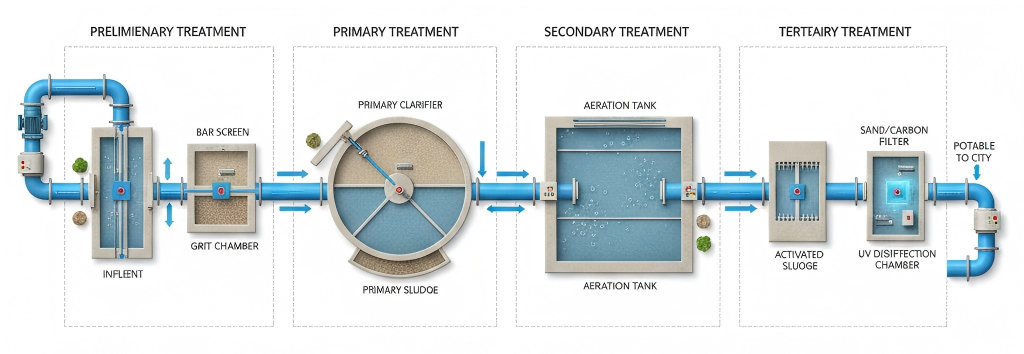
Mechanical and physical treatment methods form the backbone of many water management plants. You see these processes at work in the early stages of water treatment, where they remove large debris and suspended solids. These steps help protect equipment and improve the efficiency of later treatment stages.
Sedimentation and Filtration
Sedimentation stands as one of the oldest and most reliable methods in water treatment. You rely on this process to remove suspended solids, which reduces turbidity and improves water quality. Sedimentation uses gravity to settle heavier particles at the bottom of a tank. You often see clarifiers and chemicals used to enhance this process, making it more efficient for different types of solids.
Sedimentation has played a crucial role in water purification for centuries, showing its effectiveness in removing impurities.
You can break down sedimentation into several types, each suited for different solid sizes and densities:
Free sedimentation: Handles large, heavy particles.
Flocculent sedimentation: Uses chemicals to clump smaller particles together.
Hindered sedimentation: Deals with high concentrations of solids.
Compression sedimentation: Applies to dense sludge layers.
Filtration follows sedimentation in many water treatment plants. You use filters to trap smaller particles that do not settle out during sedimentation. Sand, gravel, and membrane filters are common choices. These filters help ensure the water meets safety standards before moving to the next stage.
Here are some key points about sedimentation and filtration:
Sedimentation removes most suspended solids and prepares water for further treatment.
Filtration captures fine particles, making water clearer and safer to use.
The design of sedimentation basins and filters greatly affects how well these processes work.
Flotation and Screening
Flotation and screening target materials that sedimentation and filtration might miss. Screening acts as the first line of defense in water treatment. You use screens to remove large objects like rags, branches, plastics, and other debris. This step protects pumps and pipes from damage.
Flotation, especially dissolved air flotation (DAF), helps remove lighter particles, oils, and fats. In this process, you introduce air bubbles that attach to contaminants, causing them to float to the surface. Operators then skim these materials off, leaving cleaner water behind.
You can see the main contaminants removed by flotation and screening in this list:
Large debris: rags, branches, plastics, and miscellaneous items
Oily or fatty substances: removed by flotation systems
Inorganic materials: addressed through sedimentation or flotation
Mechanical and physical treatment methods provide a strong foundation for any water treatment process. By removing the bulk of contaminants early, you make the entire system more effective and reliable.
Biological Treatment in Water Management Plants

Biological treatment stands as a core process in modern water treatment. You see this method used in most municipal and industrial water treatment plants because it relies on natural bacteria to break down organic pollutants. This approach not only reduces the amount of sludge but also transforms harmful substances into harmless byproducts. Today, about 70% of municipal wastewater treatment facilities worldwide use biological treatment, showing its reliability and global reach.
Activated Sludge Process
You often find the activated sludge process at the heart of sewage treatment plants and effluent treatment plants. This method uses a series of steps to clean water efficiently:
Aeration Tank: Here, you add oxygen to the water. Microorganisms use this oxygen to break down organic matter.
Secondary Sedimentation Tank: The process separates the activated sludge from the purified water.
Sludge Return System: Some of the settled sludge returns to the aeration tank to keep the process going.
The activated sludge process gives you high treatment efficiency, flexibility, and a compact design. You can fit these systems into limited spaces, making them ideal for urban areas. However, you should know that they require a lot of energy and can be sensitive to toxic substances in the water. This process remains popular because it delivers reliable results in many wastewater treatment plants.
Trickling Filter Systems
Trickling filter systems offer a different approach. You see these systems used in both municipal and industrial water treatment plants. They work well for treating household sewage and some types of industrial wastewater. Trickling filters use a bed of stones or plastic media. As water flows over the surface, bacteria living on the media break down pollutants.
You benefit from trickling filters because they use less energy than other systems. This makes them cost-effective for many communities and industries. You also find them easy to operate and maintain, which adds to their appeal.
Tip: Trickling filters are a smart choice for smaller towns or factories looking for reliable and affordable water treatment.
Membrane Bioreactors
Membrane bioreactors (MBRs) combine biological treatment with advanced filtration. You get superior water quality because MBRs remove over 90% of pollutants, including microplastics and pharmaceuticals. This level of performance goes beyond what traditional biological methods can achieve.
You see MBRs used in places where water quality standards are very strict. These systems work well for recycling and reuse projects, especially in areas facing water scarcity. While MBRs offer high efficiency, you should consider your specific needs and costs before choosing this technology.
Biological treatment plays a vital role in water management. You rely on these processes to keep water safe, protect the environment, and support sustainable development.
Chemical and Advanced Water Treatment
Chemical and advanced methods play a vital role in the water treatment process. You rely on these techniques to remove dissolved and suspended particles, eliminate harmful microorganisms, and achieve high water quality standards. Effluent treatment plants and municipal facilities use these steps to transform contaminated water into safe, usable water.
Coagulation and Flocculation
You start many water treatment processes with coagulation and flocculation. These steps help you remove particles that make water cloudy or unsafe. Coagulants like polyaluminium chloride, polyferric sulfate, and aluminum sulfate bind small particles together. Flocculants then group these particles into larger clumps, making them easier to filter out.
Coagulant Type | Dosage (mg/L) | pH | DOC Removal (%) | Turbidity Removal (%) |
|---|---|---|---|---|
Polyaluminium Chloride | 15 | 7.98 | 48.3 | 92 |
Polyferric Sulfate | 43.5 | 7.08 | 47.5 | 90 |
Aluminum Sulfate | 60 | 7.45 | 37.2 | 86.7 |
You see that the choice of coagulant affects how much organic matter and turbidity you can remove. Coagulation and flocculation are essential for transforming water into potable quality. These steps also prepare water for effective disinfection by removing compounds that could interfere with later stages.
Tip: Coagulation and flocculation are the first defense against suspended particles in water treatment.
Disinfection and Oxidation
Disinfection and oxidation protect you from harmful microorganisms and chemical pollutants. You use chemical disinfectants such as ozone, chlorine dioxide, and chlorine to kill bacteria and viruses. Physical methods like ultraviolet (UV) light also inactivate pathogens by damaging their genetic material.
AOP Type | Description | Advantages |
|---|---|---|
Ozone-Based AOPs | Uses ozone to break down contaminants. | Effective for many pollutants, including pharmaceuticals. |
UV Radiation-Based AOPs | Combines UV light with hydrogen peroxide for purification. | Common for disinfecting water and removing persistent pollutants. |
Fenton’s Reagent AOP | Mixes hydrogen peroxide and iron to form powerful oxidants. | Highly effective for organic pollutants. |
Electrochemical AOPs | Uses electricity to generate oxidants without extra chemicals. | Sustainable for water and wastewater treatment. |
Sonochemical AOPs | Uses ultrasonic waves to create oxidants through cavitation. | Efficient for breaking down tough contaminants. |
You choose the right disinfectant based on water quality, turbidity, and organic content. Ozone offers the highest oxidation potential, followed by chlorine dioxide and chlorine. Disinfection not only inactivates pathogens but also helps remove pesticides and other chemicals through oxidation.
Advanced Methods (RO, UV, Carbon)
Advanced treatment methods give you the highest level of water purity. You find these technologies in effluent treatment plants, municipal systems, and industrial facilities.
Reverse osmosis removes up to 99% of dissolved solids, salts, nitrates, and heavy metals. You get water of exceptional purity, suitable for drinking and industrial use.
Ultraviolet treatment disinfects water by eliminating 99.99% of harmful microorganisms. You rely on this method for sterilization, especially when chemical-free solutions are needed.
Activated carbon filtration adsorbs impurities, including chlorine, volatile organic compounds, and some heavy metals. You notice improved taste and odor in treated water.
Treatment Method | Description |
|---|---|
Activated carbon adsorption | Removes chlorine, odors, and organic pollutants, improving taste and safety. |
Advanced Oxidation Process (AOP) | Uses ozone, UV, or hydrogen peroxide to break down tough contaminants. |
Membrane separation technology | Includes ultrafiltration and reverse osmosis for intercepting chemicals and micro-pollutants. |
Automated monitoring and dosing | Adds chemicals based on real-time data to ensure safe water quality. |
You also see advanced options like nanofiltration and electrodialysis, which target specific contaminants. These advanced treatment methods help you meet strict water quality standards and support sustainable water management.
Note: Advanced water treatment ensures you get safe, clean water for drinking, industrial use, and environmental protection.
Desalination and Integrated Plants
Reverse Osmosis Desalination
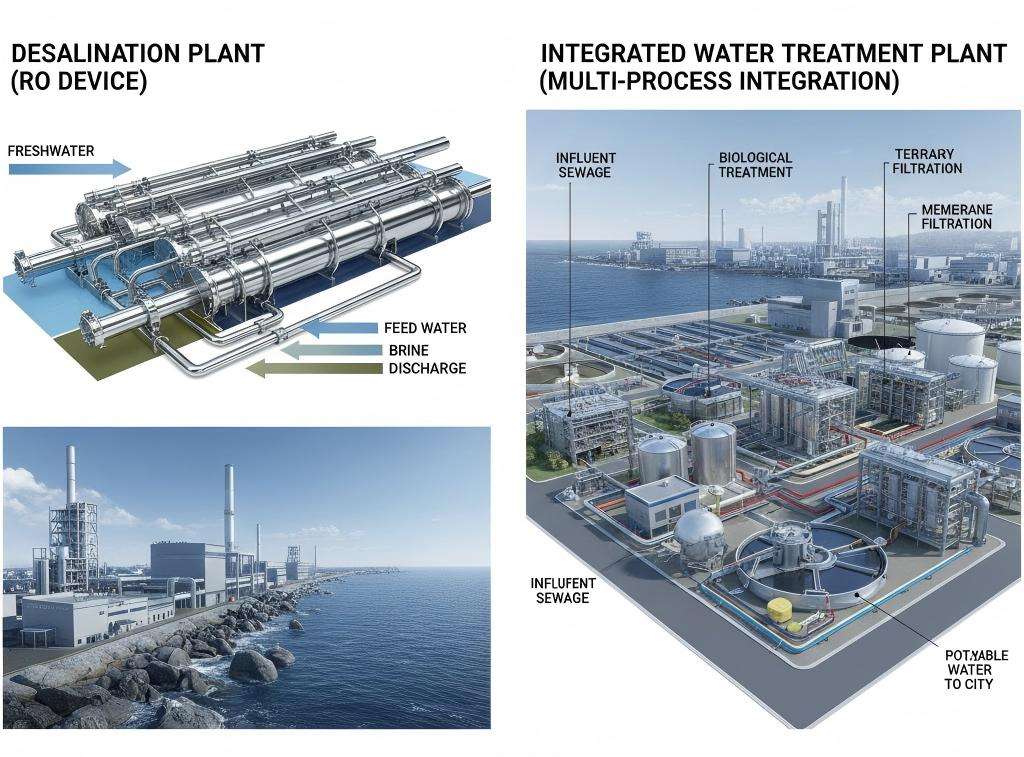
You may live in a region where freshwater is scarce. In these areas, desalination becomes a vital solution. Desalination removes salts and impurities from seawater, making it safe for drinking and other uses. Reverse osmosis (RO) stands out as the most common method. You use high-pressure pumps to push seawater through a semi-permeable membrane. This membrane lets water molecules pass but blocks salts and other impurities. The result is clean water on one side and a concentrated salty solution on the other.
You find that reverse osmosis differs from other desalination methods. For example:
Desalination covers all processes that remove salt from seawater, but reverse osmosis uses a pressure-driven membrane.
Thermal desalination methods, like Multi-Stage Flash (MSF) and Multi-Effect Distillation (MED), heat seawater to create vapor, while RO relies on pressure.
Reverse osmosis works well for both large municipal plants and smaller individual systems, making it flexible and cost-effective.
Many countries depend on desalination for their water supply. For example:
Gulf countries produce about 40% of the world’s desalinated water.
Nearly half of all desalinated water comes from the Arabian Gulf region.
Saudi Arabia leads in production, with capacity expected to reach 8.5 million cubic meters per day by 2025.
The region’s desalination capacity is set to double by 2030.
You can see why reverse osmosis plays such a crucial role in water-scarce regions. Companies like Chunke provide advanced water treatment systems that use reverse osmosis to deliver reliable, safe water.
Integrated Water Treatment Systems
You may face complex water challenges in urban or industrial settings. Integrated water treatment systems combine several processes to handle these needs. These systems treat municipal, industrial, and even seawater in one facility. You benefit from improved efficiency, better resource management, and higher water quality.
Modern integrated systems use smart technologies to optimize performance. Here is how some features help you:
Technology/Feature | Benefit/Impact |
|---|---|
IoT | Connects components for real-time insights into consumption and system health. |
Real-time analytics | Optimizes resource allocation and enhances decision-making. |
Predictive maintenance | Reduces costly breakdowns and ensures reliable service delivery. |
Smart irrigation systems | Conserves up to 50% of water compared to traditional methods. |
Advanced leak detection systems | Conserves water resources and reduces energy consumption. |
You find integrated water treatment systems especially useful in large industrial parks and cities. These systems help you meet strict environmental standards and ensure a steady supply of clean water. Chunke offers solutions that combine multiple treatment processes, making them ideal for complex water management needs.
Tip: Integrated systems let you address multiple water challenges in one place, saving time and resources.
Comparison of Water Treatment Types
Summary Table of Plant Types
You can compare water treatment plants by looking at their main processes and typical uses. The table below helps you see the differences at a glance:
Plant Type | Main Processes | Typical Applications | Key Considerations |
|---|---|---|---|
Municipal Water Treatment | Sedimentation, filtration, disinfection | Drinking water supply for cities | Aging infrastructure, regulatory compliance |
Wastewater Treatment | Biological, chemical, physical | Sewage and industrial effluent | Energy use, contaminant removal |
Industrial Water Treatment | Membrane, advanced oxidation, recycling | Factories, power plants, manufacturing | Water-stressed regions, strict regulations |
Desalination | Reverse osmosis, distillation | Coastal cities, water-scarce areas | High energy costs, salt disposal |
Integrated Systems | Combined physical, chemical, biological | Urban and industrial parks | Complex needs, smart technologies |
Recycling/Reuse Plants | Filtration, disinfection, membrane | Irrigation, industrial reuse, potable | Water quality, safety standards |
Tip: You should always check the main processes and applications before choosing a plant type. This helps you match your needs with the right solution.
Choosing the Right Water Management Plant
You face many choices when selecting water treatment plants for your home, business, or community. Start by considering the source of your water. Municipal, groundwater, and surface water each carry different risks for contamination. Next, think about how you plan to use the treated water. For example, irrigation methods like drip or sprinkler systems affect how water contacts crops and the safety of your produce.
Timing also matters. If you apply water long before harvest, you reduce the risk of pathogens. You should review available water treatment options and document them for compliance. Assess water quality by checking physical, chemical, and biological factors. This ensures you meet safety standards.
Here is a table that highlights important criteria for choosing a water management plant:
Criteria | Description |
|---|---|
Water source | Different sources have varying contamination risks. |
Irrigation method | The method affects the risk of water contact with produce. |
Timing of application | Longer intervals before harvest lower safety risks. |
Water treatment options | Technologies minimize contamination and support compliance. |
Water quality parameters | Assessment ensures safety and regulatory compliance. |
You should also consider costs and operational needs. Capital costs can reach up to 60% of your budget, covering land, construction, and equipment. Operational costs make up 30-40%, including staff, energy, and maintenance. Energy consumption can take 25-40% of operational costs, especially for processes like aeration and pumping. Labor, chemicals, and biosolids management add to expenses.
Private management often invests in new technologies, which can save costs.
Streamlined operations may reduce expenses by up to 20% compared to public management.
Faster decision-making can improve efficiency but may not always address community needs.
Municipal water management faces challenges from aging infrastructure. You may see high energy use, poor contaminant removal, and frequent maintenance. Stricter environmental standards make compliance harder. Industrial water management must adapt to water-stressed regions and tighter regulations, so innovative approaches are essential.
Note: You should match your plant choice to your water source, application, and local regulations. This ensures safe, reliable water for every need.
You now understand the main types of water management plant and how each one serves a unique purpose. Municipal and industrial users often need different water management plant solutions, while communities in water-scarce areas may rely on desalination or integrated systems. If you want to improve water quality or manage resources, consider these steps:
Invest in infrastructure upgrades or new hand pumps.
Use rainwater harvesting where possible.
Explore solar-powered systems for sustainability.
FAQ
What is the main purpose of a water management plant?
You rely on water management plants to clean, treat, and supply safe water for drinking, industry, and agriculture. These plants protect public health and the environment.
How do municipal water treatment plants make water safe to drink?
You see municipal plants use steps like sedimentation, filtration, and disinfection. These processes remove dirt, bacteria, and chemicals, making water safe for you.
Can treated wastewater be reused?
You can reuse treated wastewater for irrigation, industrial cooling, or even as drinking water after advanced treatment. This helps conserve water resources.
What is reverse osmosis, and where is it used?
You use reverse osmosis to remove salts and impurities from water. This method works best for desalination in coastal cities and areas with limited freshwater.
How do biological treatments work in water plants?
You benefit from biological treatments because bacteria break down organic pollutants. These methods clean water naturally and reduce harmful substances.
Why do industries need special water treatment plants?
You find industries use special plants to remove chemicals, heavy metals, and complex waste. This ensures water meets safety standards before release or reuse.
How do I choose the right water management plant for my needs?
You should consider your water source, intended use, local regulations, and budget. Compare plant types and processes to find the best fit for your situation.












 English
 Chinese
 German
 Russian
 Japanese
 French
 Dutch
 Italian
